Building Sales Funnels: A Step-by-Step Guide to Predictable Revenue
Building sales funnels is one of the most effective ways to turn cold traffic into predictable
revenue for your business. Yet many founders and marketers still treat funnels as a buzzword
instead of a practical, step-by-step process they can design, test, and improve. In this
guide, you’ll learn exactly what a sales funnel is, why it matters, and how to build one that
moves strangers from first touch all the way to loyal, repeat customers. Whether you sell
services, digital products, or physical goods, the principles of a well-structured funnel
remain the same.
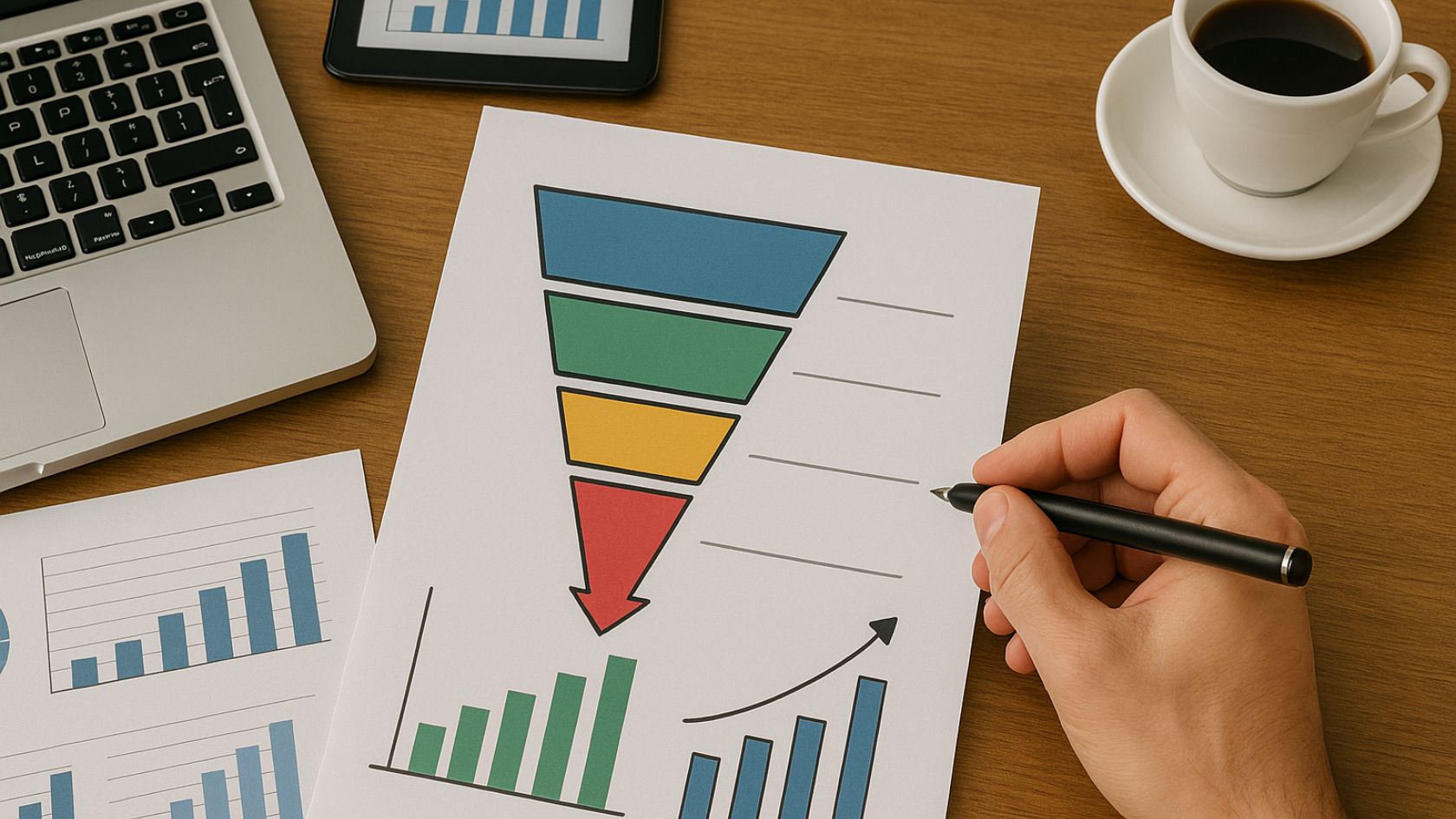
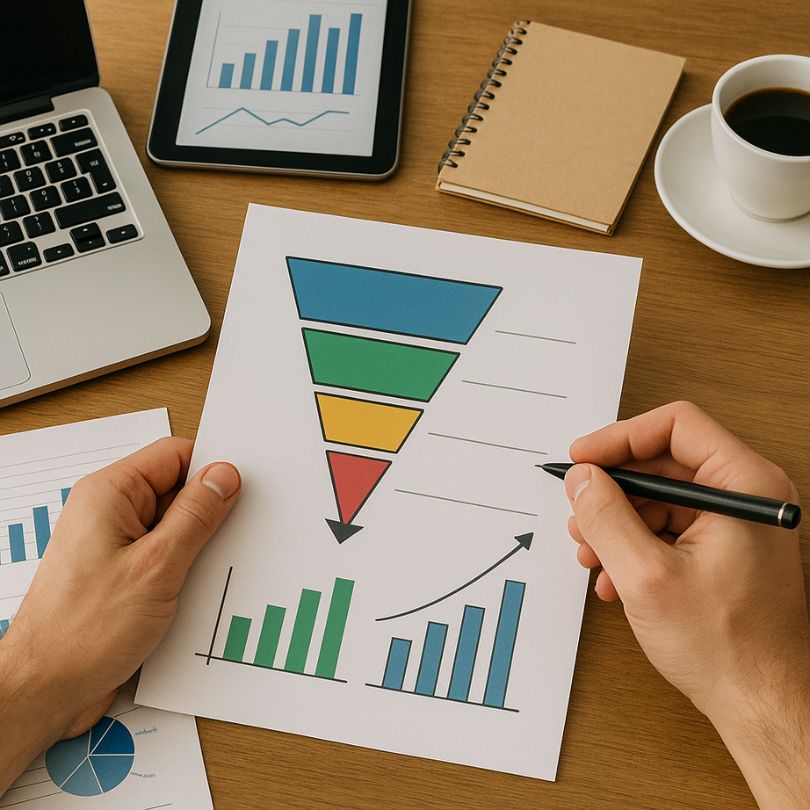
At its core, a sales funnel is a simple model that describes the journey someone takes from
discovering your brand to making a purchase and beyond. Each stage—from awareness to
consideration, decision, and retention—has a specific goal, message, and set of actions. When
you see great conversion rates, it’s usually because each step has been intentionally crafted
to remove friction and build trust. If you’d like a classic visual overview of funnel stages,
this explanation of the sales funnel concept is a helpful starting point, but we’ll go much deeper into the practical steps in this
article.
Step 1: Understand Your Audience and Core Offer
Before you touch any technology or tools, you need clarity on who you’re serving and what
you’re offering them. Strong funnels start with a specific audience, a painful problem, and a
clear promise of transformation. Talk to existing customers, review testimonials, and study
sales call recordings to uncover the language your market actually uses. Then define one
flagship offer that will sit at the heart of your funnel—whether that’s a high-ticket
consulting package, a productized service, or a single flagship product. The tighter your
positioning, the easier it becomes to lead people from curiosity to commitment.
Once your offer is defined, map how prospects will first experience value from you, often
through a lead magnet, free training, or helpful resource. This “quick win” should solve a
narrow problem and naturally point toward your paid solution. For example, a SaaS company
might create a checklist, webinar, or interactive tool that helps users get an early result
with your platform. If you sell physical or digital products, in-depth
product guides and comparison content can both attract organic traffic and pre-sell your solution by
educating people on how to evaluate options.
Step 2: Map the Stages of Your Sales Funnel
In the awareness stage, your goal is simple: get qualified people to notice you. This can
happen through content marketing, paid advertising, partnerships, social media, or outbound
outreach. Rather than trying to be everywhere, choose a few channels you can execute
consistently and track closely. The key is alignment between channel and audience behavior—if
your buyers spend their time on LinkedIn, investing everything into TikTok won’t make sense.
Treat awareness as the top-of-the-funnel fuel: you’re not trying to sell immediately, just to
spark enough interest that people will click, subscribe, or opt in.
Once someone has engaged with your content or joined your email list, they move into the
consideration stage. Here, people are asking themselves: “Is this relevant to me? Can I trust
this brand? Do they really understand my situation?” Your job is to answer those questions
with case studies, how-to content, comparison pages, and educational emails that guide
prospects toward the next logical step. This is also where you can introduce
segmentation—tagging subscribers based on interests or behavior—so you can send more tailored
messages that respect where they are in the journey.
The decision stage is where prospects evaluate your core offer and decide whether to buy now,
later, or never. To support them, your funnel might include a dedicated sales page, a
time-limited promotion, a discovery call, or a product demo. Clarity beats cleverness at this
stage: spell out who your offer is for, what’s included, the results they can expect, and what
happens after they purchase. Social proof—like testimonials, reviews, and case studies—plays a
major role here, as does risk reversal through guarantees or free trials. The easier you make
the “yes,” the higher your conversion rates will climb.
Many funnels stop after the first purchase, but the most profitable ones continue into
retention and expansion. After someone buys, your funnel should onboard them quickly, help
them get an early win, and invite feedback so you can fix issues before they become
cancellations or refunds. Simple post-purchase email sequences, in-app tours, or follow-up
calls can dramatically improve customer satisfaction and lifetime value. You can then
introduce logical upsells, cross-sells, or referral programs that reward customers for
sticking around and spreading the word. This is how building sales funnels becomes a
long-term growth engine instead of a one-time campaign.
Step 3: Assemble the Core Components of Your Funnel
With your stages mapped out, it’s time to assemble the actual assets that will power your
funnel. At a minimum, most modern funnels include a lead capture page, a thank-you or
confirmation page, a series of nurturing emails, and a primary sales page or checkout flow.
Depending on your model, you might also layer in webinars, automated demos, chatbots, or SMS
reminders. Rather than building everything from scratch, look at existing assets you can
repurpose—like blog posts that can be turned into email sequences, or slide decks that can be
adapted into a video training. Reuse saves time and speeds up testing.
Copy and messaging are just as important as the technical pieces. Every step of your funnel
should answer three questions for the visitor: “Where am I?”, “Why should I care?”, and “What
do I do next?”. Strong headlines, clear calls-to-action, and benefit-focused bullet points
help remove confusion and keep people moving forward. Avoid jargon and focus on outcomes:
more leads, more revenue, saved time, reduced risk. Remember that people are busy and
skeptical; if they have to work hard to understand your offer, they will simply close the tab
and move on.
Step 4: Choose Tools, Track Metrics, and Optimize
Technology should support your funnel strategy, not replace it. Start with a reliable email
service provider, a landing page or website builder you can edit without developers, and an
analytics stack that shows you where people drop off. As traffic grows, you can add more
advanced capabilities such as behavior-based automation, A/B testing, and personalization.
Rather than chasing every new platform, focus on the tools you can master. Set up clear
tracking for key metrics at each stage—opt-in rate, email open and click rates, sales
conversion rate, and average order value—so you can quickly identify where improvements will
have the biggest impact.
Optimization is an ongoing process, not a one-time project. Once your initial version is
live, commit to regular review cycles where you examine data, collect qualitative feedback,
and run focused experiments. You might test a new headline, a shorter form, an updated offer
stack, or a different follow-up sequence. Make one meaningful change at a time so you can
attribute results accurately. Over a few months, these iterative improvements compound into
major gains. The businesses that win with funnels aren’t necessarily those with the fanciest
designs, but those that keep learning from the market and adjusting accordingly.
Step 5: Avoid Common Funnel-Building Mistakes
As you build and refine your funnel, watch out for a few frequent pitfalls. One is sending all
traffic to a generic homepage instead of a focused landing page that matches the ad or content
they just clicked. Another is asking for too much information upfront, which can depress
opt-in rates. Many teams also skip nurturing and jump straight from awareness to hard sales
pitches, which usually leads to low-quality leads and high unsubscribe rates. Finally, avoid
copying competitors blindly; what works for a huge brand with massive awareness may not work
for a smaller business with a different audience and positioning.
Conclusion: Building Sales Funnels as a Repeatable Growth System
When you understand the stages, components, and data behind building sales funnels, the
process stops feeling mysterious and starts looking like a repeatable system. You’re no longer
guessing which campaigns might work; you’re designing intentional journeys that meet prospects
where they are and guide them toward the next step. Over time, you can plug in new traffic
sources, test fresh offers, and even explore specialized acquisition methods such as
native advertising tools while your core funnel remains stable. Start with a simple, end-to-end version, launch it, and keep improving it. The momentum you build will compound into predictable, scalable
revenue.
