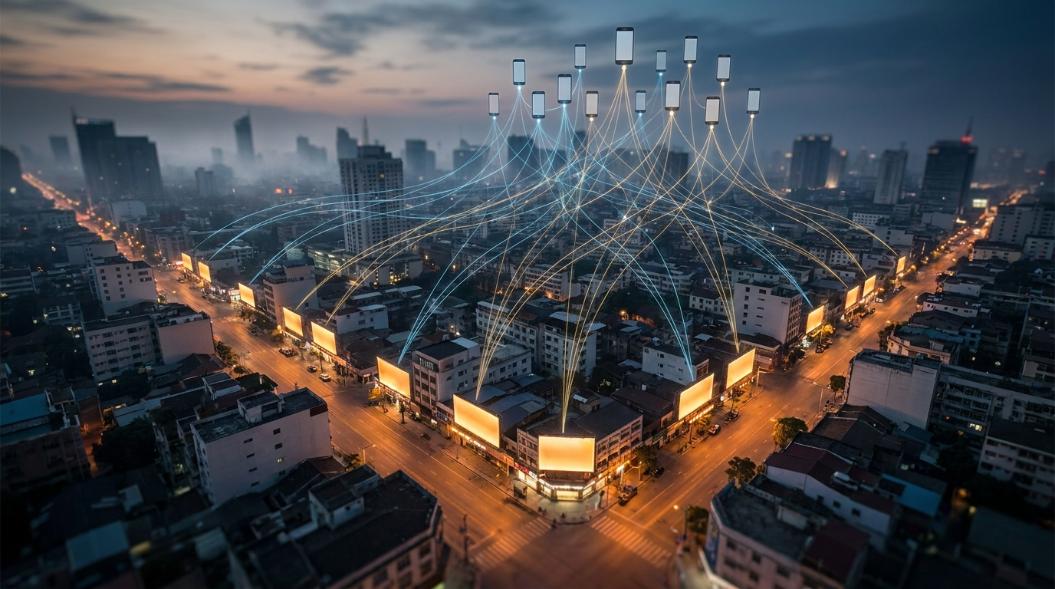
How to Intercept Audiences Targeted by OOH Campaigns Using Native and Push Advertising
The OOH Boom Is Handing You a Targeting Roadmap
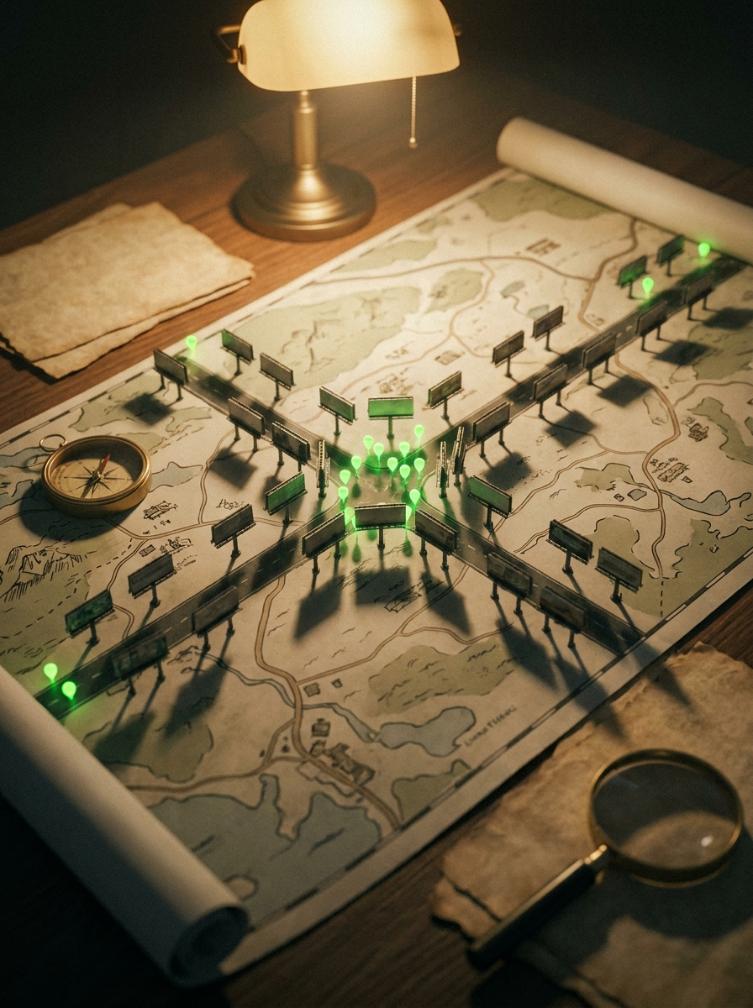
Out-of-home advertising is experiencing a surge that should matter to every performance marketer — not because it competes for your budget, but because it functions as a publicly visible declaration of where the biggest brands in the world believe their customers are. Every billboard placement, every digital screen rotation, every transit wrap is the end product of audience research, geo-demographic modeling, and media planning funded by budgets most performance teams will never have access to. The smart move is to treat all of that work as free intelligence.
The numbers behind the boom make the opportunity hard to ignore. Programmatic DOOH ad spend is projected to reach $1.35 billion by 2026, growing at more than twenty-two percent year-over-year, while eighty-six percent of marketers plan to increase their OOH investment over the next two years. These aren’t hypothetical commitments. Research from the OAAA and Winterberry Group shows that ninety-eight percent of marketers already view OOH as a core or supporting component of their connected commerce strategies — a figure that reflects genuine strategic priority, not trade-association optimism.
What’s driving the acceleration is a fundamental shift in how outdoor inventory gets bought and measured. As Clearcode explains, the migration from traditional OOH to digital out-of-home has replaced slow, manual insertion orders with programmatic buying powered by geofencing, real-time audience data, and cross-channel attribution. DOOH targeting now draws on mobile location data from ad exchanges, ticket-sales information from live events, IR sensor counts at shopping-mall entrances, and third-party measurement from firms like Nielsen and Quividi. Campaigns can be triggered by weather conditions, time-of-day patterns, and even proximity to competitor locations. In other words, the brands running these campaigns aren’t guessing where their audiences congregate — they’re buying against verified behavioral and environmental signals.
This data-driven precision is exactly why OOH placements have become such a valuable intelligence source for performance marketers working in native and push channels. When a DTC mattress company or a fintech startup lights up digital billboards along specific commuter corridors or in particular DMAs, they are revealing the geographic and demographic conclusions of their media planning process. They are telling you which neighborhoods index high for their target persona, which dayparts they believe drive the most attention, and which cultural moments — sporting events, product launches, holiday travel — they consider worth investing in. That level of market insight would cost tens of thousands of dollars to replicate through your own primary research.
The value argument strengthens the case for paying attention. OOH carries the lowest CPMs of any advertising medium, and digital formats generate 3.2 times more neurological response and memory encoding than static placements. Eighty percent of consumers report being likely to take action after seeing a visually engaging outdoor ad, with nearly half searching for the advertiser and almost a quarter making a purchase. Those downstream actions — the searches, the site visits, the purchase intent — create a predictable wave of digital behavior that native ads and push notifications are perfectly positioned to capture.
The takeaway is straightforward: the OOH boom isn’t something happening in a parallel universe to your performance campaigns. It’s a roadmap drawn in plain sight by brands with deep research budgets and sophisticated targeting models. Your job is to read it — and then show up on the screens people reach for the moment after they look away from that billboard.
Why OOH-Exposed Audiences Are Uniquely Primed for Digital Interception
Something remarkable happens in the brain when a person encounters an out-of-home ad — something that doesn’t happen with the same intensity when they scroll past a banner or skip a pre-roll. Digital out-of-home formats drive 3.2 times more neurological response and memory activity than traditional static advertising, a finding rooted in neuroscience research rather than self-reported surveys. That distinction matters enormously because memory encoding is the mechanism that determines whether a brand impression fades in seconds or persists long enough to influence a downstream decision. When someone walks past a transit shelter ad, drives by a highway digital board, or stands in an elevator facing a screen, their brain is doing significantly more cognitive work than the advertiser might realize — and certainly more than most performance marketers give it credit for.
The behavioral data reinforces what the neuroscience suggests. Eighty percent of consumers report they are likely to take action after encountering a creative, visually engaging OOH ad. Nearly half go on to search for the advertiser, and almost a quarter make a purchase. These are not vanity metrics. They describe a population that has been cognitively primed — moved from passive awareness into active intent — by a single physical exposure. That population is now walking around with their phones in their pockets, browsing content on their lunch breaks, checking notifications on their commutes home. They are, in a very literal sense, waiting to be intercepted.
This is where the concept of interception timing becomes critical. The window between OOH exposure and the next digital touchpoint is where the most valuable conversion opportunity lives. A person who saw a billboard for a fintech app forty minutes ago and now encounters a native article about simplifying personal finances is not responding to that native ad in a vacuum. Their brain has already done the expensive work of encoding the brand, associating it with a need, and generating a low-level intent signal. The native ad or push notification doesn’t need to build awareness from scratch — it only needs to provide the friction-reducing nudge that converts latent interest into a click, a signup, or a purchase.
As Clearcode explains in its breakdown of DOOH measurement, you can treat digital out-of-home as a full-funnel channel by feeding DOOH-exposed audiences into retargeting pools so that attribution accounts for OOH’s role across the entire journey rather than measuring it in isolation. That infrastructure insight reveals an important strategic truth: the brands running those OOH campaigns are already building the top of the funnel for you. They are spending millions on the most neurologically potent awareness medium available, and the audiences they prime are then released into the digital ecosystem — searchable, targetable, interceptable.
The arbitrage here is almost too clean. OOH does the heavy cognitive lifting: attention capture, trust signaling, memory formation. Those are the most expensive outcomes in advertising, and someone else’s budget is covering them. Your native ad or push notification, deployed in the right geography at the right time, only needs to pay for the conversion layer — the final step where elevated awareness meets a compelling call to action. You are not duplicating the brand lift. You are harvesting it. And because the audience arrives at your ad already primed, your click-through rates, engagement metrics, and cost-per-acquisition numbers benefit from cognitive work that never appeared on your invoice.
How to Identify Which Brands Are Doubling Down in Specific Markets
The OOH industry has spent decades operating behind a veil of opacity — impression estimates were proprietary, placement data was fragmented, and outsiders had little visibility into where major brands were concentrating spend. That era is ending. The same transparency infrastructure being built to reassure OOH advertisers that their money is well spent is now, perhaps unintentionally, creating one of the most powerful competitive intelligence layers available to performance marketers.
Start with the measurement backbone. Geopath, the not-for-profit organization established in 1934, provides industry-standard audience metrics for the entire OOH ecosystem. Their methodology quantifies reach, frequency, and demographic composition for virtually every billboard, transit shelter, and digital screen in the United States. When Veridooh joined Geopath to bring independent audience verification to the US DOOH market, the integration created something unprecedented: a unified dashboard where advertisers can see Geopath-verified impressions alongside real-time play data tracked by Veridooh’s patented SmartCreative technology — every second of every play, without relying on media owner self-reporting. For the 325 advertisers already on Veridooh’s platform, this means digital-level accountability. For you, the outsider watching the market, it means the signals of where big money is flowing have never been more legible.
Here’s the practical intelligence-gathering process. Begin by monitoring DOOH programmatic platforms and the data sources that feed them. As Clearcode’s analysis of the DOOH ecosystem explains, the types of data collected for DOOH targeting and analytics typically include ticket sales from concerts and sporting events, IR sensor data from shopping mall entrances, third-party measurement from companies like Nielsen, camera and sensor data from providers like Quividi, and mobile location data from ad exchanges. Each of these signals reveals not just where audiences are, but where advertisers believe high-value audiences are clustering. When a brand activates DOOH programmatically — increasingly through the same DSPs that handle display, mobile, and CTV — those buys leave footprints in the broader programmatic ecosystem that attentive buyers can detect.
Layer in ad spy tools. Services like Pathmatics, AdBeat, and Moat can surface which brands are running heavy digital creative in specific metros. Cross-reference that digital spend data with visible OOH activity — which you can physically observe, track through social media posts of billboard sightings, or monitor via DOOH inventory marketplaces — and patterns emerge quickly. When a brand shows up simultaneously on highway digitals, transit wraps, and programmatic display in the same DMA, they are making a concentrated market bet.
The verification side compounds this advantage. Because Veridooh’s platform now integrates Geopath’s reach and frequency metrics into a single reporting layer offering what they describe as programmatic certainty for automated buys, the standardization of impression data means you can estimate, with reasonable confidence, how many people in a given metro are being exposed to a competitor’s OOH campaign. That audience estimate becomes your targeting input.
The timing element matters as much as the geography. Monitor seasonal surges — when a DTC brand ramps OOH in a market ahead of a product launch, or when a category leader blankets a city during a tentpole event, the window to intercept those primed audiences with native and push campaigns is measured in days, not months. Set up alerts in your spy tools, track DOOH inventory availability as a proxy for demand, and treat every verified OOH impression cluster as a signal to deploy.
Building Geo-Targeted Native and Push Campaigns That Mirror OOH Footprints
Once you’ve identified where a brand is running OOH placements and understood the audience those placements are designed to reach, the next step is building digital campaigns that shadow that physical footprint with precision. The good news is that native ad networks and push notification platforms already offer the granular controls you need — the craft lies in layering them intelligently.
Start with geography, the foundation of the entire strategy. Most native advertising platforms allow you to target users based on zip code or within a radius of specific coordinates, which means you can draw a tight digital perimeter around every billboard, transit shelter, or digital screen in a competitor’s OOH campaign. If you’ve mapped a brand’s placements across, say, twelve zip codes in the greater Chicago area, you create twelve corresponding geo-fences in your native campaign. For push notification campaigns, you configure the same geographic zones so that subscribers in those areas receive timely, relevant messages that complement your native placements. Geography alone, however, creates a net that’s far too wide. A billboard on the Kennedy Expressway reaches commuters, fitness enthusiasts, parents, retirees — everyone with eyes. Your digital campaign needs to be sharper than that.
This is where demographic and interest targeting transforms a blunt geo-fence into a surgical instrument. If the OOH campaign you’re intercepting belongs to a luxury auto brand, you layer income brackets, age ranges, and automotive interest segments on top of your geographic targeting. If it’s a fitness app dominating transit shelters near university campuses, you filter for eighteen-to-twenty-four-year-olds with health and wellness interests. As the Brax team explains, demographic targeting focuses on age, gender, behaviors, and financial capacity, while interest targeting relies on cookie-based behavioral signals that reveal what users actually care about. Stack both on top of your geo-targeting and you’ve already eliminated the vast majority of irrelevant impressions.
The next layer is contextual. IAB category targeting lets you control which publisher content your ads appear alongside — not based on who the user is, but on what they’re reading. A brand running OOH for a ski resort? Target the Sports and Travel IAB categories so your native ads surface on articles about winter getaways and mountain destinations. This contextual alignment creates a cognitive bridge: the user saw the billboard that morning, and now they’re reading related content where your competing or complementary offer appears organically in the feed.
Time-of-day scheduling adds the final dimension. DOOH campaigns frequently leverage weather and time-of-day data to serve contextually appropriate creative — morning commute messaging, lunchtime promotions, evening entertainment pushes. Your digital shadow should follow the same rhythm. Daypart your native and push campaigns to align with the hours when those OOH placements receive peak foot and vehicle traffic. If the billboards sit along commuter corridors, weight your budget toward morning and evening rush hours. If they surround entertainment districts, shift spend toward evenings and weekends.
One critical principle governs all of this: your creative should complement the OOH campaign’s themes, not copy them. If a brand’s billboard screams “Adventure Awaits,” your native ad shouldn’t parrot that language. Instead, address the desire that message awakened — “Compare adventure travel packages before you book” or “The gear that actual adventurers trust.” You’re not counterfeiting their brand. You’re positioning yourself as the next logical step in the decision journey that their billboard just initiated. The billboard created the intent. Your layered digital campaign captures it.
Timing the Digital Layer — From Exposure Window to Conversion Window
Interception isn’t just about being in the right place — it’s about being there at the right time. And the evolution of DOOH is making that timing increasingly predictable, even for outsiders looking to draft off someone else’s campaign.
Traditional static billboards ran around the clock, which meant the audience exposure window was broad and diffuse. Digital out-of-home has changed that calculus entirely. Modern DOOH campaigns are built around contextual triggers — dayparts, weather conditions, event schedules — that concentrate impressions into specific, identifiable windows. As Clearcode has documented, DOOH content can be tied to weather and time-of-day data, and targeting often involves reaching a certain demographic at a certain time based on data collected from the environment. That means a billboard for an allergy medication might only activate when pollen counts spike, or a quick-service restaurant ad might only run during the lunch daypart. These aren’t random exposures — they’re scheduled, triggered, and therefore anticipatable.
This predictability is your advantage. If you know a competitor’s DOOH campaign fires during morning commutes on weekdays, you can schedule your native ad campaigns to run from 7:00 to 9:30 AM in the same metro areas. If their stadium screens light up during sold-out games — and you can verify event schedules through ticket sales data and third-party measurement — you can time push notification campaigns to land on phones as fans file out of exits, primed by the messaging they just absorbed for ninety minutes.
The practical implementation breaks down into three temporal strategies.
Concurrent delivery means running your digital ads during the same window the OOH exposure is happening. A commuter sees a transit shelter ad for a fintech app at 8:15 AM, then opens a news site on their phone at 8:22 AM and encounters your native ad for a competing product. The OOH ad did the category priming; your ad captures the consideration. To execute this, schedule your native campaigns around known peak exposure periods — morning commutes, lunch hours, evening rush — and layer in the geo-targeting you’ve already built. Most native platforms allow time-of-day scheduling at the campaign level, so this requires no special technology, just discipline.
Immediate follow-up delivery targets the thirty-to-ninety-minute window after peak OOH exposure ends. This is particularly effective around events. Concert-goers, sports fans, and conference attendees are highly concentrated audiences with shared context. When the event ends, they scatter — but they scatter with their phones. Push notifications timed to event exit windows can achieve outsized engagement because the audience is in a receptive, high-energy state and actively using their devices to coordinate rides, check scores, or share experiences.
Weather-triggered synchronization mirrors the DOOH advertiser’s own contextual logic. If a brand is running rain-activated digital billboards for waterproof jackets, you can use the same weather APIs to trigger your own native campaigns for competing products in the same markets. The weather doesn’t just tell you when their ads are running — it tells you when the audience is most receptive to the category.
The key technical enabler across all three strategies is geo-targeting by radius or zip code, which lets you constrain your time-based campaigns to the precise areas where OOH exposure is occurring. Time-of-day scheduling without geographic precision wastes budget on audiences who never saw the OOH creative. Geographic targeting without temporal alignment misses the psychological window when category awareness is freshest. You need both dimensions working in concert — the right place and the right moment — to turn someone else’s exposure event into your conversion opportunity.
Measurement, Attribution, and Scaling What Works
The irony at the heart of this entire strategy is that OOH attribution has historically been the weakest link in the medium’s value chain — and that weakness is precisely what creates your opportunity. Because the brands running those billboard campaigns often can’t precisely measure their own impact, they’re flying partially blind. But you don’t have to. By running controlled geo-tests with your interception campaigns, you can build an attribution framework that’s arguably more rigorous than what the OOH advertiser themselves is using.
The structure is straightforward. Select matched market pairs — metros with similar demographics, population density, and baseline conversion rates. In one set of markets where you’ve identified active OOH campaigns from a competitor, run your native and push interception layer. In the matched control markets, either run no campaign or run the same digital creative without the OOH-adjacent geo-targeting. Then compare. The metrics that matter are conversion rates, click-through rates, cost per acquisition, and — critically — branded search volume for both the competitor’s brand and your own.
That last metric deserves special attention. Research has shown that nearly half of consumers search for the advertiser after seeing a creative OOH ad, and almost a quarter go on to make a purchase. That search lift is your canary in the coal mine. When a competitor launches a major OOH push in a given metro, you should see their branded search volume climb in that DMA within days. Google Trends and tools like SEMrush make this observable in near-real time. If their branded searches are rising in a market where you’re running interception and your own CTRs and conversions are outperforming control geos, you have a strong signal that your strategy is working — you’re capturing demand that the OOH campaign is generating.
For estimating the total exposed audience pool, use the same measurement infrastructure the OOH industry relies on. Veridooh’s recent integration with Geopath now provides advertisers with verified play data alongside standardized reach and frequency metrics in a single dashboard, which means the impression counts for major DOOH placements are increasingly transparent and auditable. You can reference Geopath’s publicly available impression estimates for specific inventory units to model how many people are seeing the OOH creative in a given corridor, then calibrate your digital spend against that estimated exposure. If a highway billboard is delivering 800,000 weekly impressions according to Geopath-verified data, you know the upper bound of the audience pool you’re trying to intercept — and you can size your native and push budgets accordingly.
The iteration loop follows naturally from this measurement framework. Double down on markets where interception campaigns show statistically significant lift over controls. Pull back or reallocate budget from metros where the gap is negligible — which might mean the competitor’s OOH creative isn’t resonating, or the audience overlap between their placement and your targeting is weaker than expected. And continuously scan for new OOH investment signals: new programmatic DOOH buys, media agency announcements, or even physical observation of fresh placements in high-value corridors. With programmatic DOOH ad spend projected to reach $1.35 billion by 2026 and growing over twenty-two percent year-over-year, the surface area available for interception is expanding rapidly.
The brands spending millions on OOH are generating demand they can only partially track. You’re building the measurement system they wish they had — except it’s measuring your conversions, not theirs.
